Everlasting Freedom
In a small mountain village filled with animism and the spirit worship of northern Myanmar, seeds of atheism were sown in the dissatisfied heart of a young boy named Taik.
Everywhere Taik looked were hunger, turmoil, and fear. His village comprised of a few dozen shelters made of bamboo, wood, and thatch which deteriorated in the intense mountain weather. When snow fell heavily, Taik and other children would climb onto the thatch roofs to clear it away before the roof collapsed. During warmer months, the villagers cut trees, burned brush, and planted rice to survive, yet rice rarely lasted the whole year and the community annually experienced starvation.
“Eat this, and you will become brave.”
Worse than the physical difficulty was the constant community fear of the mountain spirits. Fear was the formal religion of the village. When too much snow damaged homes, the spirits were angry. When the rice ran out, the spirits were offended. Once, when Taik's younger brother became sick, the village priest was called. He chanted loudly and then suddenly announced that the evil spirit harming Taik's brother was coming up the stairs. The priest threw a knife, and it stuck into the wooden steps. Blood appeared in the stairway. That moment intensified the village fear. However, the weight of spiritual punishment crippled any animistic faith Taik might have had.
When Taik's mother abandoned his family, his father who traveled for work arranged for Taik to live with Chinese teachers. The teachers were fierce, reclusive, and disciplined. Though Taik was only five years old, he woke before dawn, worked, studied, and endured mountain life almost entirely alone—without love or security.
Hardship shaped Taik's heart deeply. He questioned how people could pray to any god who would allow this. Surely no good god existed when Taik's life began with such pain and loneliness.
After finishing school, Taik entered a college off the mountain. Life turned drastically, though, when a non-state military unit known as the Kachin Independence Army took Taik and forced him to train and serve in their mountain camp. Taik experienced new fear as harsh trainers put weapons in his hands and turned him into a rebel.
One night, Taik and other trainees heard a gunshot. Someone had run from the KIA camp and died for his efforts. Later that night, Taik's trainer gave all the trainees a special meat and told them, “Eat this, and you will become brave.” Without choice, they ate.
The rumors came in the morning. The camp buzzed with news about the traitor who ran the night before. His body was cut. His flesh had been given to the trainees who knowingly ate. From that moment, a darkness full of shame, confusion, and torment consumed Taik. The memory was never far from his mind.
Taik's service to the KIA ended abruptly when government soldiers came and arrested him. Though he was sentenced to two years in prison, an amnesty plea by Buddhist monks led to an eleven-month release date. Even as Taik walked free from external bars, he could not escape his internal prison forged from fear and shame.
A past teacher who cared about Taik's future helped him continue his college studies through correspondence. During the years of completing his bachelor's degree, Taik made friends with those from many religions—Buddhism, Islam, Hinduism—but the Christians seemed different. They not only spoke of faith but lived it out.
For some time, Taik lived with a Chinese global worker family. Daily, Taik witnessed a faith founded in love and not fear. The foundation of Taik's atheism fractured further when he became seriously sick. Doctors at the hospital found nothing wrong, but Taik could not recover. Eventually, the Christian family prayed for him, and Taik was healed!
Taik's heart began to turn to Jesus, the Liberator of Souls, and Taik wondered, “Maybe God is real? Maybe prayer is not foolishness.” Taik responded intellectually to Christianity, accepting the logical idea of Jesus but not experiencing the heart change of true belief.
Taik decided to attend Bible school to study scripture and understand God better. He began suffering repeated attacks of malaria and high fevers. One evening, Taik read 1 Peter 2:24 which says, “By His stripes you were healed.” Taik didn't know how to pray, but he spoke honestly to God, saying, “If You are truly God, heal me from these sicknesses. Then I will believe and serve You.”
The next day, Taik's health improved. On the second day, the fever weakened. By the third day, Taik realized the truth: God had answered his prayer. Taik felt as though God were saying, “You can call on Me. I am real!” Still, Taik did not come to Jesus with his shackled heart.
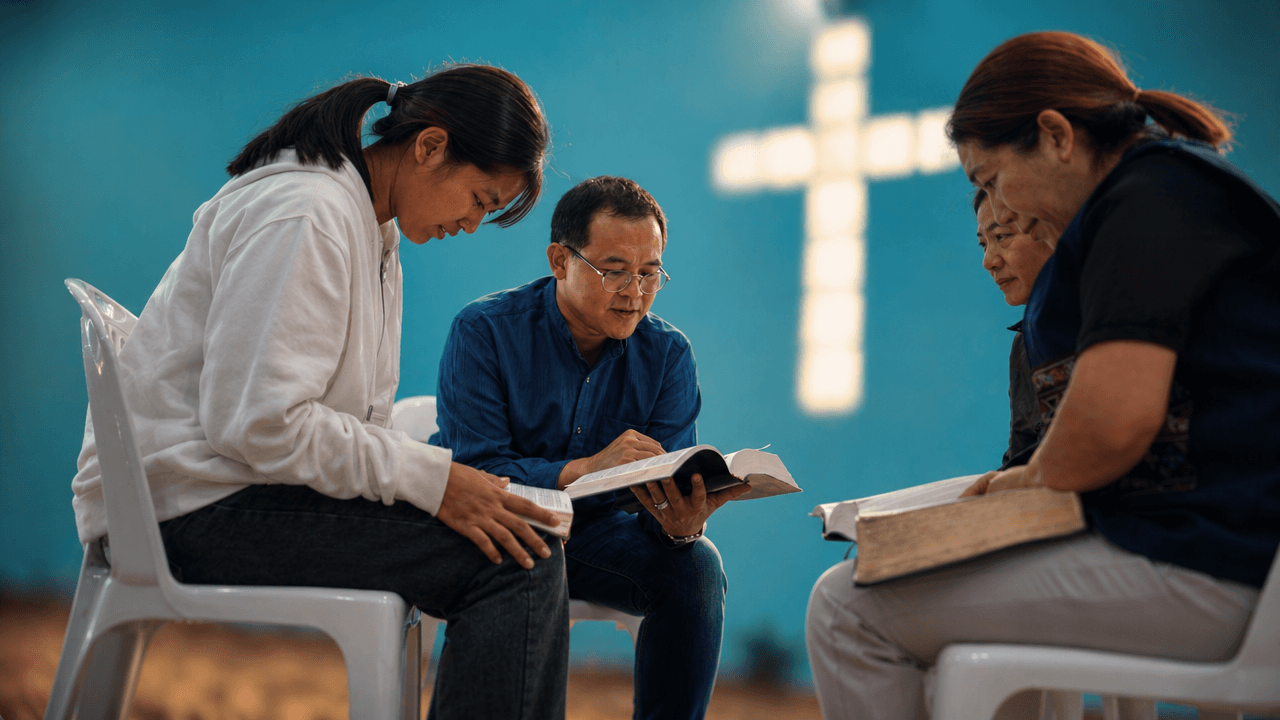
One Friday night, Taik's Bible college hosted an all-night prayer meeting. Students gathered, and as they prayed, the Holy Spirit began to deal with the fear and shame in Taik's soul. Taik felt such a fire in his heart. He stood, unable to keep his past hidden anymore. Light shone on darkness as Taik confessed the nightmarish experiences with the KIA and what happened to the trainee who attempted to escape.
The shocked students listened to Taik's tearful confession and deep anguish. They surrounded Taik and prayed for him. Suddenly, amidst their sincere, powerful prayers, something broke. The shackles and prison bars not only unlocked, they disintegrated. The torment lifted, and peace, true peace, filled Taik's heart. That night, Taik understood the difference between believing with the mind and being transformed by the Spirit. From that moment, Taik chose Jesus.
Taik began sensing a call to ministry, and though he feared the poverty and hardship often associated with ministers in Myanmar, he surrendered, promising, “No matter what comes, Lord, I will go.”
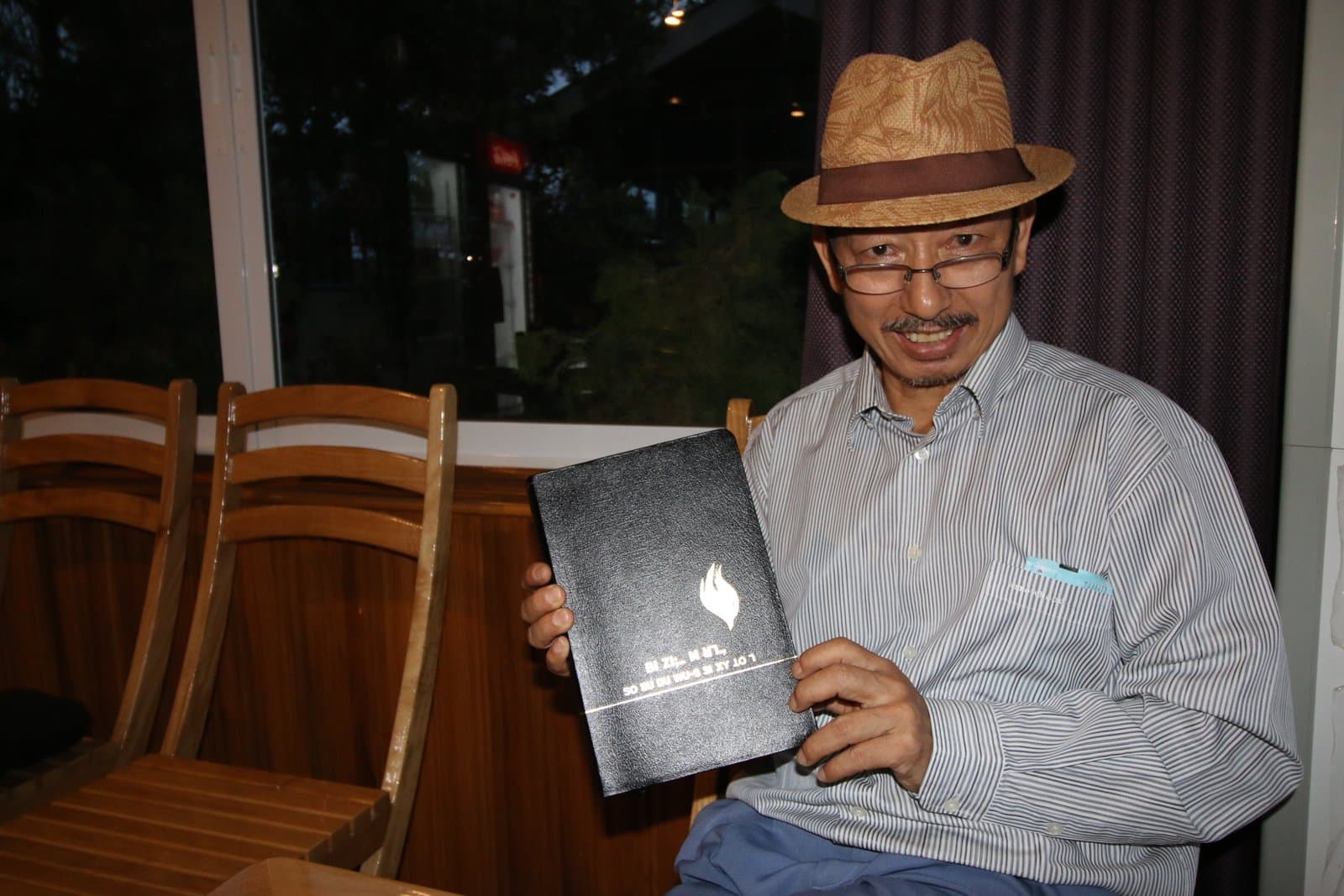
Before Taik launched into full-time service, a global worker gave Taik an English New Testament FireBible. Since Myanmar was a closed country, theological books were extremely rare and precious. Receiving the FireBible felt like receiving an entire theological library in one book. The FireBible became Taik's essential companion, richly filling his early years of ministry. Taik still describes his FireBible as a gemstone he returns to again and again.
Years later, Taik helped develop the Burmese FireBible. Upon publication, Taik saw how effective in discipleship the FireBible was, and he thought, “If Burmese believers can have this Bible, why not the Lisu people?”
Taik became a coordinator of the Lisu FireBible project and helped gather a large editorial team to serve the diverse dialects of Lisu speakers. As Taik served alongside editors and translators he believed in the FireBible as more than a book. His work mattered deeply to the discipleship efforts of many denominations of believers.
Baptist, Methodists, Church of Christ leaders, and many others read the Burmese FireBible in their heart language. Then Burmese leaders received the Lisu FireBible, and later the Zomi Chin FireBible.
FireBibles reached into homes like those in Taik's mountain village, filled with the darkness of fear, shame, and spiritual oppression. The FireBible became a silent preacher to the Burmese people, a constant revelation of light, truth, and freedom. When civil war broke out in Myanmar and global workers had to evacuate to safety, the FireBible remained, pushing God's Kingdom forward despite the darkness. Today, the FireBible still serves in the regions of Myanmar and in the languages of its people.
The Lord walked with Taik from an animistic mountain, through a dangerous KIA camp, into the home of Chinese global workers, and into a Bible college where a heartbroken confession at one prayer meeting resulted in everlasting freedom. Taik's response to this freedom is to unshackle the chains and bondage on the lives of other Burmese men and women by advocating for and distributing the faithful, freeing Word of God explained through the FireBible.